






Your First Track Day on a Budget
What's actually in the rulebook, what's marketing noise, and the cheapest legitimate path to your first day on track.
It's 7:30 in the morning at a regional road course. A rider rolls in with a brand-new $1,800 leather suit, fresh race rubber, a borrowed generator, two tire warmers still in shrink-wrap, and a helmet they bought yesterday because the internet told them their old one wasn't track-legal. They've never been on a closed course before. Their classroom session starts in thirty minutes. By the time they suit up, they will not have read a single page of the org's rulebook.
The bike is a 2019 Yamaha R6 the rider has owned for eight months. The tires that came off it last week — a half-worn set of Bridgestone S22s — would have been completely fine for the day they're about to have. The leathers that were already in the closet, a four-year-old Joe Rocket two-piece, would have passed the org's tech inspection without a comment. The helmet they replaced was a current-production Shoei RF-1400 with three years of life left on it.
That rider has spent roughly $3,800 of unnecessary money before turning a wheel. None of it is going to make them faster, safer, or more welcome in the novice group than the rider one paddock spot over who showed up in their existing gear and signed up for the on-track coaching that's already included in the entry fee.
This guide is the conversation that should happen before any of that money gets spent. We're going to walk through what's actually in the 2026 rulebooks at the major US track-day organizations, what gear is required versus marketed, where used gear is genuinely fine, where it absolutely isn't, and what your first three days at the track should realistically cost you. By the end you'll know how to put yourself on track for under $600 if that's the budget you have, and how to build a smart first-season setup for under $4,000 if you can afford it.
The Marketing-Versus-Rulebook Gap
Open a glossy gear catalog from any major retailer and you will get the impression that a track day requires a $1,500 leather suit, a $700 helmet, $400 gauntlet gloves, $500 boots, a $250 back protector, race-compound tires, tire warmers, a generator, safety wiring tools, water-wetter coolant, and a paddock stand. That gear stack runs about $4,500 before you've paid your entry fee.
Now open the actual rulebook of the org you're attending. They're all public, all skimmable in fifteen minutes, and they almost universally describe a much shorter list. The track-day orgs are the more permissive cousins of the racing orgs, and they were built around the assumption that a rider new to the sport shouldn't have to spend more on equipment than the bike costs.
This is the actual gear floor at three of the largest US track-day operators in 2026, transcribed directly from their published rulebooks.
| Org | Helmet | Suit (Novice) | Gloves | Boots |
|---|---|---|---|---|
| STT | BSI / ECE 22.05 / DOT / Snell, full-face, damage-free | Ballistic nylon two-piece (Joe Rocket, AeroStitch) acceptable in Novice only, with 50% zipper contact | Gauntlet, full wrist coverage | Cover the ankle |
| N2 | Undamaged, eye protection | Full-circumference riding suit, no jeans | Required | Required |
| 2Fast | DOT, good condition | One- or two-piece, leather highly recommended but not required | Leather palm and finger coverage | Over the ankle |
Read that table carefully and notice what's missing. None of those orgs require a Snell rating in the novice group. None of them require a one-piece leather suit. None of them require race-compound tires, tire warmers, a back protector specifically for the novice group, safety-wired drain plugs, or a water-wetter coolant change. STT explicitly accepts ballistic nylon suits in Novice. 2Fast explicitly accepts a non-leather two-piece. N2 doesn't even specify a cert standard for the helmet.
The marketing list and the rulebook list look like they came from two different sports.
Helmets: The One Thing You Can't Buy Used
This is the single hard rule of first-track-day shopping. The helmet is the one piece of gear where the math on used never works out. Three reasons.
First, the rulebooks. Precision Track Days codifies a five-year-from-manufacture cap on helmets. WERA codifies the same five-year cap on the racing side. Even the orgs that don't explicitly enforce a date will reject a helmet that looks aged, faded, or scuffed in the chinbar. A used helmet that's three years old to the seller is two years from being unusable to you. A used helmet that's four years old is one good drop in shipping away from being a paperweight.
Second, the EPS foam. The white liner inside the shell is engineered to compress on impact. It also degrades — slowly but irreversibly — from sweat, body oils, UV, and any drop. There is no way to inspect this from outside. A seller can tell you the helmet "was never crashed in" and be telling the truth, and the foam can still be soft from four summers of being baked on a back deck.
Third, the cert situation in 2026. The Snell Memorial Foundation transitioned from M2020 to M2025 in August 2024. New M2025-rated helmets meet a tougher rotational impact standard than M2020 did. ECE 22.06, mandatory across the EU since January 2024, adds the same rotational testing. The current generation of new helmets is meaningfully safer than what was on shelves five years ago. An entry-tier ECE 22.06 helmet — HJC i91, AGV K3, Sedici Strada III — runs $300 to $500 and buys you the current standard with a fresh five-year clock. Stepping up to Shoei RF-1400, Arai Quantum-X, AGV K6 S, or HJC RPHA 12 pushes you into the $600 to $1,200 range, and you're paying for comfort, weight, and ventilation, not for safety the cert standard doesn't already promise.
The helmet is the only piece of gear where "used" makes the math worse. Buy a new ECE 22.06 or Snell M2025D in the $300 to $500 range and you've covered the most expensive piece of safety gear on your body for the next five years.
One nuance worth understanding. Track-day orgs are permissive about cert standards — STT, N2, and 2Fast all accept any current major cert (DOT, ECE, Snell). Race orgs are stricter, but even WERA and ASRA publish lists that include older Snell standards (M2010, M2015, M2020) within a five-year-from-manufacture window. So an older helmet that's still inside that window isn't a paperweight. The marginal cost of a new mid-tier helmet over a used one is just small enough, and the EPS-foam uncertainty just large enough, that the helmet is the wrong place to save money.
Suits, Boots, and Gloves: Where Used Gear Earns Its Keep
Outside of the helmet, the used market is genuinely a friend.
Leather Suits
A used Dainese, Alpinestars GP Tech, or Spidi Track Wind two-piece that retailed at $1,200 to $1,800 new shows up regularly on the secondary market in the $400 to $700 range. The original rider sold it because they're moving up a tier or out of the sport, the suit's been used for a handful of track days, hand-washed, and stored properly. Most of what's listed on regional STT Facebook groups, the Track Day Junkies forum classifieds, RoadracingWorld classifieds, and eBay Motors is exactly that.
What to inspect on a used leather suit:
- Stitching at the major seams — shoulders, hips, inseam, crotch. Stitching is the first thing to fail in a slide. If any seam has popped or pulled, walk away.
- The back protector pocket — open it. There should be a hard EVA insert, ideally CE Level 2 rated. If the pocket is empty or stuffed with a foam pad, factor in an $80 Forcefield Pro L2 or Alpinestars Nucleon KR-2 to drop in.
- Slider hardware — knee pucks should screw on. If the sliders are sewn into the suit and abraded through, that's a hard pass.
- CE armor age — the inserts at shoulders, elbows, hips, and knees are date-stamped. CE Level 1 and 2 armor is rated to degrade after roughly five years. New armor sets are $30 to $60 to swap.
- Smell — mildew or unwashable funk means the suit lived in a damp gear bag for a winter. Some funk is normal. Real mildew is structural water damage to the leather.
For Novice group at STT, you don't actually need leather at all. STT explicitly accepts ballistic nylon two-piece suits in the Novice group — Joe Rocket Phoenix and similar textile two-pieces are named in the rulebook — provided the suit has 50% zipper contact between the two pieces and reinforced shoulders, elbows, hips, and knees. A new Joe Rocket two-piece runs around $250 to $350 and is a perfectly legitimate novice-day suit. You'll need leather to graduate to Intermediate, but you have a season to find a used one.
Boots
Used Alpinestars SMX-6 or SMX-Plus, TCX RT-Race Pro, or Sidi Vortice show up at half-new pricing all the time. The thing that fails on a track boot is the structural shell — the ankle pivot, the toe slider, and the sole binding. None of that is hidden. Try them on, walk in them, flex the ankle pivot through its full range, and look at the toe slider for through-wear. If the boot feels structurally sound, used is fine.
Track-day orgs that don't compete in WERA or ASRA territory generally just require "over the ankle" boots — STT and Precision both. The 8-inch minimum height in the WERA rulebook is a racing-side rule, not a track-day-side one. A regular pair of Alpinestars SMX-1 R V2 — $200 new, around $100 used — passes tech at every track-day org we've checked.
Gloves
Gloves are the in-between case. Buy them new, but buy entry-level new instead of used premium. The reason: the palm and knuckle armor inside a glove degrades on you, and there's no way to inspect it. A new Alpinestars SP-1 V2, Cortech Speedway, or Joe Rocket GPX 2.0 gauntlet glove runs $70 to $120, passes tech anywhere, fits properly, and has a known service life. A $200 used pair of Alpinestars GP Pro v2 with two seasons of sweat in the palm padding is a worse deal than the new entry-level.
The gauntlet rule is universal at track-day orgs that publish a spec — STT requires it explicitly, and so does Precision. Short cuff gloves get rejected at tech.
Tires: The Easiest $500 to Save on Day One
Every novice-group rider has heard the same advice from a buddy who's been to the track a few times. "Just throw a set of Supercorsas on it. They're what the fast guys run." That buddy is solving a problem you don't have.
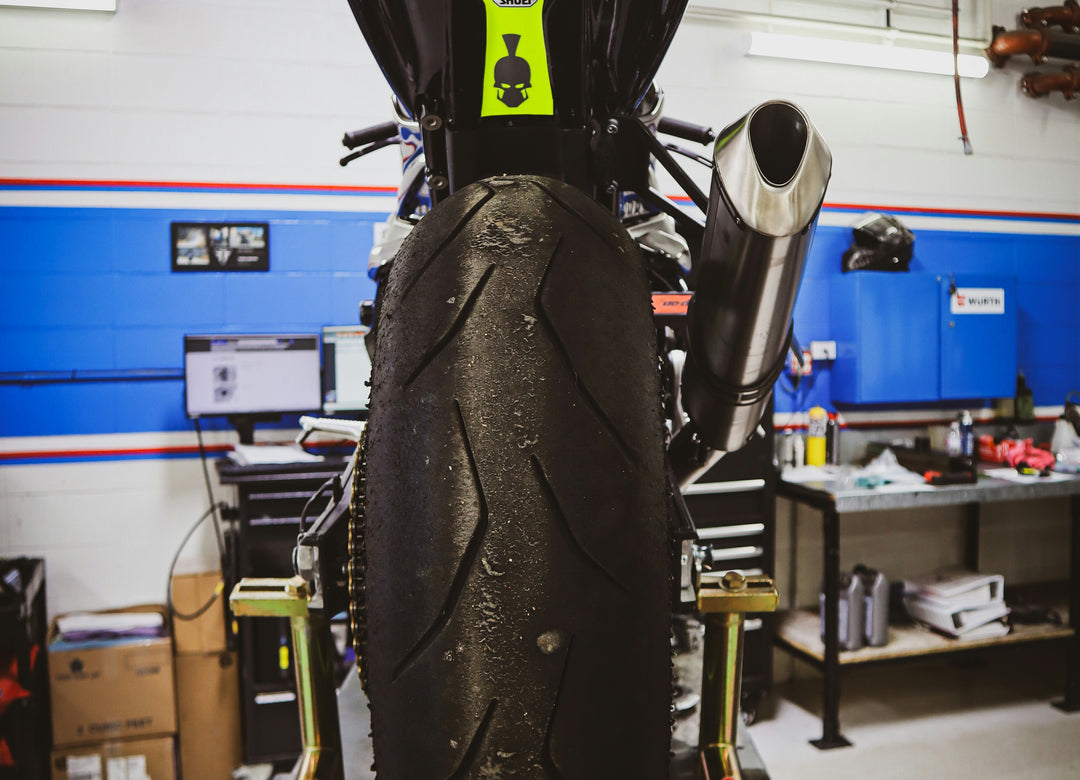
Pull up the actual tire rules at any major US track-day org. STT: "Tires must be in good condition and at least 50% of new condition." N2: "Minimum 2/32 of tread over the wear bar." That's the rule. Nothing about compound, nothing about race versus street, nothing about manufacturer. A half-worn set of Bridgestone S22s, Michelin Road 6s, or Dunlop RoadSmart IVs — your existing street tires, in other words — passes tech at any of these orgs.
What about performance? Multiple instructor sources, the major moto magazines, and the tire reps themselves all converge on the same answer for novice-group pace. Sport-touring tires are fine. Hypersport street tires (Pirelli Diablo Rosso IV, Michelin Power 6, Dunlop Q5S, Bridgestone S23) are ideal. Race-compound tires are overkill until you're in fast Intermediate or Advanced — and they require warmers to work safely, because cold race rubber has measurably less grip than cold sport rubber.
The math on this is brutal. A novice on a $400 set of fresh hypersport street tires will get three to five track days out of them, work-from-cold reliably, and never need a warmer. A novice on a $550 set of race rubber will get one to three track days, will need $300 to $700 worth of tire warmers plus a $200 generator to make the tires functional, and will spend the first lap of every session on rubber that's actively losing the heat their pace can't reload. The race tire isn't faster for that rider. It's slower, more fragile, and more expensive.
Bike Prep: The Minimum, Not the Maximum
Tech inspection is shorter than you think. Here's what every novice has to do, regardless of org.
- Tape over or remove all glass — headlight, turn signals, mirror lenses, plate lenses. Painter's tape from the hardware store is fine.
- Tape mirrors closed or remove them. STT requires this for Novice and Intermediate, removal in Advanced. N2 requires mirrors taped or removed for everyone except their Intro group.
- Tape your license plate bolts.
- Cap your valve stems and duct-tape your wheel weights. Wheel weights coming loose at speed is a real problem.
- Operational kill switch and self-closing throttle. If your bike came from the dealer, you have both. Verify.
That's the list. Total cost in supplies: about $20 in masking and electrical tape from a hardware store. Total time: 30 minutes the night before.
Here's what is not required for a novice, despite the marketing. None of these need to happen for your first track day in the Novice group at any major US org.
- Coolant change to water-wetter. N2 explicitly requires this only of Advanced riders. STT only of Intermediate and Advanced. Novice is exempt at both. Skip the $30 of coolant and the 90 minutes of work.
- Safety wiring of oil drain plug, oil filter, and caps. N2 explicitly says Intro, Novice, and Intermediate "are not required" to safety-wire. STT requires it only in Advanced; Intermediate uses RTV silicone; Novice is exempt.
- Belly pan. N2 calls it "recommended but not required."
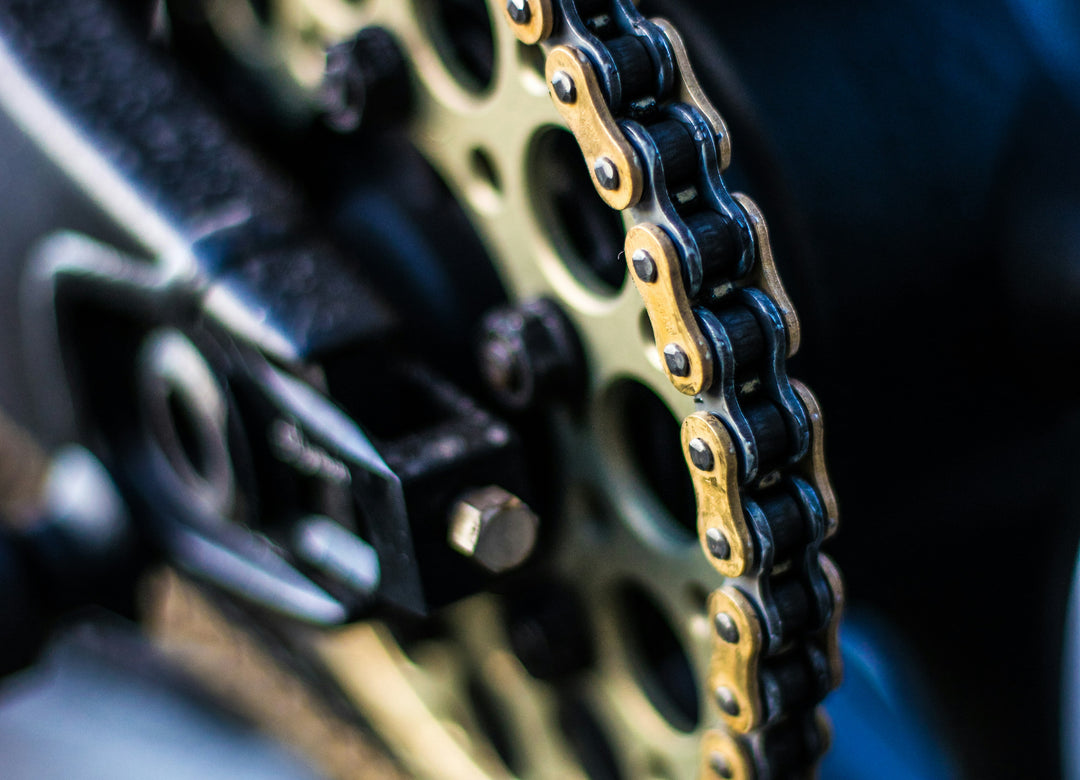
- Sprocket and chain swap. None of the rulebooks we surveyed mandate a service interval. Tech inspection checks brakes, controls, tires, and obvious leaks. A clean, lubed, properly tensioned chain on a stock sprocket is fine.
The maximum bike-prep list is what a serious club racer does for their bike before a championship round. The minimum bike-prep list is what a first-time novice rider needs. They are not the same list. Use the rulebook for the org you're attending and stop there.
The Cheapest Legitimate Path In
If money is tight and you want to ride a track day to find out whether you even like it, the cheapest legitimate option in the US in 2026 is a Penguin Racing School day at Thompson Motorsports Park (CT) or New Hampshire Motor Speedway. Penguin's published 2026 pricing structure:
- Thompson, advance booking 10+ days out: $275 entry
- NHMS, advance booking 10+ days out: $290 entry
- Full head-to-toe gear rental — leathers, helmet, boots, gloves: $110
That's $385 in Thompson pricing or $400 at NHMS for a complete legitimate first track day, gear included, with the oldest motorcycle riding school in America providing the instruction. Penguin has been running rider schools since 1975. The classroom curriculum is real, the on-track coaching is real, and they will rent you everything you need to walk in with no equipment.
Yamaha Champions Riding School is the gold-standard alternative. ChampStreet Paddock at $495 to $595 is a one-day school that allows you to ride in your existing street gear (no leathers required) on a kart-track-scale layout, taught by the same instructors who run their flagship two-day program. The full-track variant (ChampStreet Track) on a kart track plus a speed-limited section of the main road course runs $595 to $995. The two-day ChampSchool at $2,695 to $3,595 is a different class of investment, but for a serious rider committing to multiple seasons, it's the single best money you'll spend in your first year.
If you already have gear and want to ride local, look at MotoVid (Midwest), N2 Track Days (East Coast and Southeast), STT (national), and 2Fast (Pacific Northwest). MotoVid Yellow Group novice days run $259 to $269. N2 Basic membership is $115 and unlocks discounted day rates. Separately from the membership, N2 runs a free Intro program — limited to five riders per event with two 20-minute structured beginner sessions and dedicated mentorship. That free Intro slot is the single best deal in US track days for a rider with no track experience whatsoever.
Coaching Is Already Included. Use It.
Here's a thing nobody mentions in the gear ads. Every legitimate US track-day org includes instruction in the entry fee. STT's own description of their Novice program: "comprehensive classroom instruction in between track sessions as well as on-track instruction for every single Novice rider, and never charges extra for this important benefit." MotoVid Yellow Group is instructor-led. N2 runs free Intro sessions with two beginner blocks and one-on-one mentorship.
The classroom blocks are 15 to 30 minutes between sessions, taught by control riders who race or who have raced, and they cover the highest-leverage things you can learn for your day: vision and lookahead, body position, where to brake, how to read flags. A rider who skips the classroom blocks to wander the paddock is wasting the most valuable part of the entry fee they already paid.
The on-track coaching is even higher leverage. Most orgs let you ask a control rider to follow you for a session, give you hand signals through corners, and meet you at the end with notes. This is free, and it's the equivalent of a private one-on-one lesson at any other riding school. Use it on every novice day until you get bumped up.
Common Rookie Mistakes That Cost Real Money
From instructors at every major track-day org, the same four mistakes show up over and over.
1. Cold-Tire First Lap
The single most common novice incident is a lowside on the first lap of the first session. The tire was cold, the rider hadn't built temperature gradually, and they took a corner at the pace they finished at the end of last session. Build temperature over an entire lap on cold tires. No maximum lean, no maximum brake until lap two. The control riders are doing the same thing. Watch them.
2. Hunting for Knee-Down on Day One
Knee-down is a result of body position, not a goal. Trying to drag a knee on your first day tightens your upper body, ruins your line, drags the bike to the inside, and is the second-most-common cause of novice lowsides. Smooth lines, smooth inputs, vision through the corner. The knee will touch when the body position is right. It's a status symbol, not a skill marker.
3. Skipping the Track Walk
Most orgs offer a slow parade lap or a Friday-evening track walk. Take it. Walking the track on foot, even one or two corners, gives you reference points your eye uses on lap one of session one — apex curbing, surface changes, paint stripes. You ride better on a track you've already seen up close.
4. Buying Race Tires and Warmers Before Your First Day
This is the most expensive of the four. The race tires don't make a novice faster — they make them slower and more fragile. The warmers don't make a novice safer — they add a thousand dollars of overhead to a tire that wasn't going to grip at novice pace anyway. Spend that money on a second track day instead. You'll learn ten times more from a second day in the saddle than from any tire upgrade.
Should You Buy Track-Day Insurance?
For most first-timers on most bikes, the honest answer is no.
The mechanics: standard motorcycle insurance excludes track use almost universally — including non-competitive HPDE and track-day events. A handful of carriers (Foremost via specialist agents like MotorcycleAgent.com) will write a policy that explicitly covers approved non-competitive track days, but you have to ask, and the rider remains responsible for verifying that the specific event qualifies. Anything timed, anything competitive, anything with prize money is excluded everywhere.
Dedicated single-event track-day insurance does exist. It typically covers physical damage to your bike during the day, sometimes accessory coverage, and rarely third-party liability (the org's waiver covers that). Forum-reported pricing lands at $150 to $300 per day for a $10,000 to $15,000 bike, or 3 to 8 percent of bike value annualized for season coverage.
The math gets simple when you compare it to crash repair. A typical novice lowside on a Ninja 400, MT-07, R3, or SV650 — the bikes most novices ride — costs $1,500 to $3,000 in clip-ons, levers, bar ends, fairing repair, and a clutch perch. Insurance for one day at $200 against a worst case of $3,000 is reasonable insurance math. Insurance for one day at $200 against a likely case of zero damage and an outside case of $1,500 is a worse bet than just absorbing the risk.
Run the numbers honestly. Bike worth more than $15,000? Get a quote. Bike worth $5,000 to $8,000 and you have an emergency fund? Skip the policy and ride within the limits the novice group is built around.
The Real Three-Day, First-Season Budget
Here is a defensible budget for a rider who already owns a sport bike, is starting from zero on gear, and wants to do three track days in their first season at mid-Atlantic or Midwest pricing. Used gear where it makes sense, new where it doesn't.
| Item | Cost |
|---|---|
| New ECE 22.06 helmet, entry tier — HJC i91, AGV K3, Sedici Strada III | $300 to $500 |
| Used two-piece zip-together leather suit, inspected per the checklist above | $400 to $700 |
| New entry-level gauntlet gloves — Alpinestars SP-1 V2, Cortech Speedway, Joe Rocket GPX 2.0 | $70 to $120 |
| Used leather track boots — SMX-6, TCX RT-Race | $100 to $200 |
| CE Level 2 back protector if not in suit pocket — Forcefield Pro L2, Alpinestars Nucleon KR-2 | $80 to $150 |
| Three track-day entries — Penguin, MotoVid, or N2 Basic at standard rates | $750 to $900 |
| N2 Basic membership (if going N2 route) | $115 |
| One fresh set of hypersport street tires, mounted | $400 to $500 |
| Fuel, three trips, tow vehicle | $300 to $450 |
| Tape, masking, miscellaneous | $20 |
| Food, one or two motel nights | $150 to $300 |
| First-season total | $2,700 to $3,950 |
That number assumes you take all your gear home with you and ride track days again. The amortized cost of just the track days, if you spread the gear across three seasons, drops to around $1,200 a year — less than a single weekend at COTA with a full pro setup.
If you want to test-drive the whole concept before committing to gear, the cheapest legitimate single-day try in the US is Penguin at Thompson with their full rental package. Entry plus head-to-toe gear is $385 with advance booking ten or more days out. Add $200 for fuel, food, and a cheap motel, and you have a complete first track day for under $600 with no gear in your closet to justify afterwards.
Frequently Asked Questions
Do I need a Snell-rated helmet for my first track day?
Probably not. STT explicitly accepts BSI, ECE 22.05, DOT, or Snell. 2Fast accepts DOT alone. N2 doesn't specify a cert standard at all. The orgs that require Snell specifically tend to be on the racing side — WERA, ASRA — not the track-day side. A current-production ECE 22.06 helmet from any major brand is accepted everywhere a track-day novice is going to be riding in 2026.
Can I wear my street gear to a track day?
Depends on the gear and the org. STT accepts ballistic nylon two-piece suits like the Joe Rocket Phoenix in Novice group only, with 50% zipper contact between the two pieces. 2Fast doesn't require leather at all, only "good condition" with armor at elbows, shoulders, and knees. N2 just requires a "full-circumference riding suit" with no jeans. If you have a real two-piece riding jacket and pants set with armor, you have a defensible argument at most novice-friendly track-day orgs. If you're showing up in jeans and a textile commuter jacket, you're getting turned away.
What about Yamaha Champions School in street gear?
Yamaha's ChampStreet program is built specifically around riders showing up in their existing street gear. The Paddock variant ($495 to $595) runs on a kart-track-scale layout. The Track variant ($595 to $995) adds a kart track plus a speed-limited section of the main road course. Both are taught by the same instructors who run the flagship two-day ChampSchool. If you have a riding jacket, riding pants, gloves, boots, and a helmet, you can ride a Yamaha Champions program day without any track-specific gear at all. It's the only major US program structured this way.
Is buying used leather safe?
Yes, with inspection. Check the major seam stitching at shoulders, hips, inseam, and crotch. Verify the back protector pocket has a hard EVA or CE Level 2 insert (not foam). Look at the slider hardware. Check the date stamp on the CE armor and budget $30 to $60 to swap inserts older than five years. Avoid anything with mildew, water damage, or popped seams. A used Dainese, Alpinestars, or Spidi suit at half new price, properly inspected, is a smarter spend than a brand-new entry-level suit at the same money.
Do I really need a back protector for my first track day?
Most orgs don't require a separate back protector specifically for the Novice group. STT requires one for Intermediate and Advanced and explicitly says soft pads sewn into the suit aren't sufficient at those levels. N2 calls it "highly recommended." 2Fast doesn't explicitly require it. That said, every instructor will tell you to ride with one. A Forcefield Pro L2 or Alpinestars Nucleon KR-2 is $80 to $150, fits inside a back-protector-pocket suit, and is the single highest-leverage piece of safety gear you can add. Buy one with the suit.
What's the cheapest way to do a single track day to see if I like it?
Penguin Racing School at Thompson Motorsports Park, advance booking. Entry is $275, head-to-toe gear rental (leathers, helmet, boots, gloves) is $110. Total $385 with no gear in your closet. Drive in, ride a full novice day with classroom instruction included, return the gear, drive home. With travel and food it's roughly $585 for a complete first-day experience. Nothing else in the US is meaningfully cheaper without sacrificing instruction quality.
Do I need tire warmers?
No. Sport-touring and hypersport street tires (Pirelli Rosso IV, Michelin Power 6, Bridgestone S23, Dunlop Q5S) are designed to work from cold within an out-lap. Tire warmers are mandatory infrastructure for race-compound rubber, which a novice shouldn't be on. The single-day savings are large — warmers run $300 to $700 plus a $200 generator — and the safety case for a novice is actively better on a sport tire than on a cold race tire.
Do I need to safety-wire my drain plug and change my coolant before my first track day?
Not in the Novice group at the major US orgs. N2 explicitly exempts Intro, Novice, and Intermediate riders from safety wiring. STT exempts Novice; Intermediate uses RTV silicone instead; safety wire is required only in Advanced. The coolant rule is similar — N2 only requires water-only coolant in Advanced. STT requires it in Intermediate and Advanced. Novice riders don't have to do either. That's roughly $50 of supplies and three hours of bench work a first-timer doesn't need to spend.
Should I get track-day insurance for my first day?
Probably not, unless your bike is worth more than $15,000. Standard motorcycle insurance excludes track use, so a crash on a $7,000 bike would cost you out of pocket. Single-day track insurance is reportedly $150 to $300 per day for a $10,000 to $15,000 bike. If your bike is in that range or below, the math says ride within novice-pace limits and absorb the risk. If you're tracking a $20,000+ machine, get a quote from a specialty broker like MotorcycleAgent.com.
How fast does a novice actually go in a typical session?
Slower than you think and faster than you expect. A first-day novice on a 600cc sport bike at a track like Thompson, Summit Point, or Roebling Road averages about 60% of the lap times set by the same bike in Advanced group. The pace feels fast inside the helmet — the lean angles, the corner exits, the wind on the straights — and it produces grip demands the existing tires can already meet. Build pace progressively over the day and let the instructors signal when it's time to push for the bump up.
The Short Version
Read your org's rulebook before you spend a dollar on gear. The list is shorter than you think. Helmet new, suit and boots used, gloves new entry-level, back protector new entry-level. Existing street tires if they have tread, hypersport street if you're due for a swap. Tape your mirrors and your turn signals, leave your coolant alone, leave your drain plug alone, show up early, and use every minute of classroom and on-track coaching included in the entry fee.
The rider who shows up with $4,500 of fresh gear and zero track time isn't going to outpace the rider who shows up with $1,200 of inspected used gear and a notebook for the classroom blocks. They're going to spend their first season learning the same lessons at five times the cost.
Spend the money on the second track day instead. The first one teaches you what you don't know. The second one teaches you what to do about it. That sequence is worth more than any tire, any suit, and any helmet you could have bought to skip it.